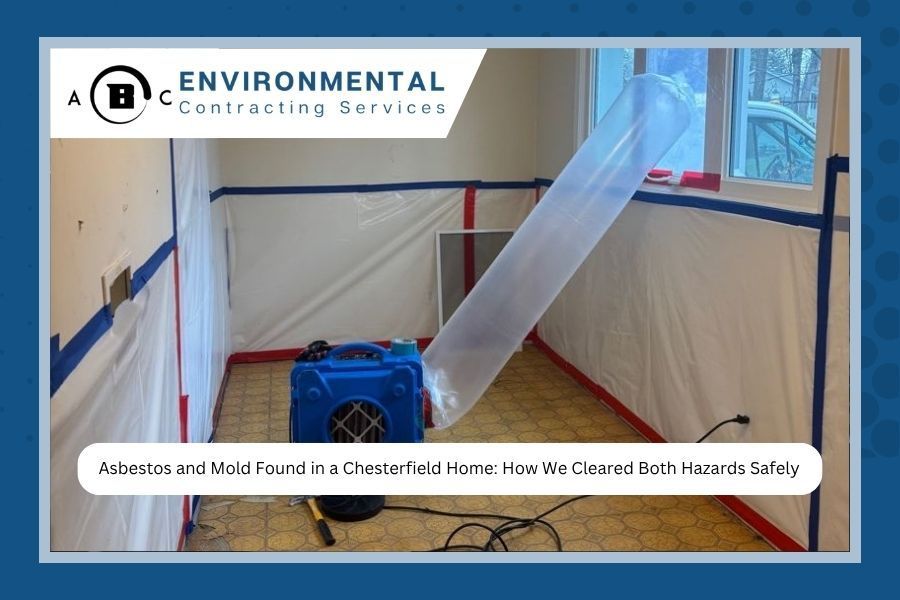
Asbestos and Mold Found in a Chesterfield Home: How We Cleared Both Hazards Safely
June 23, 2026
When a Chesterfield homeowner reached out to ABC Environmental Contracting Services about some concerns in their laundry room and kitchen, we weren't expecting to find two separate hazardous material issues under the same roof. But that's exactly what we found, and it's not as unusual as you might think. Older homes in the St. Louis area have a way of stacking surprises on top of each other.
How It Started
The homeowner had noticed some deteriorating material in the laundry room and wasn't sure what it was. They also had some discoloration showing up in the kitchen that concerned them. Smart call to get it checked out before starting any renovation work.
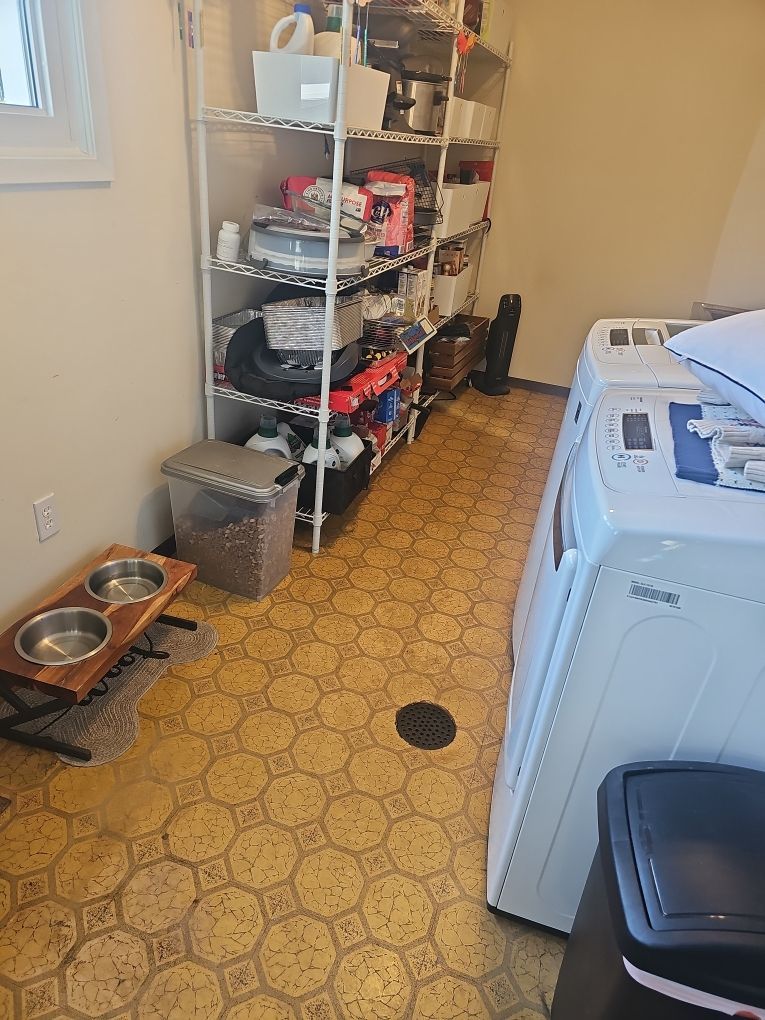
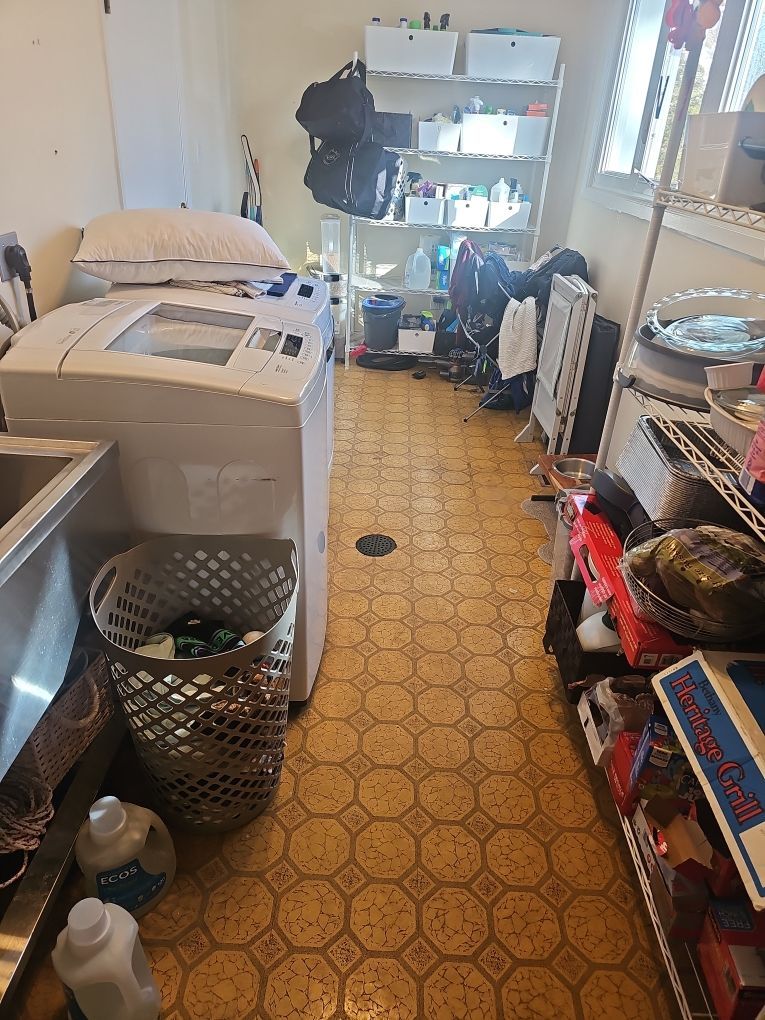
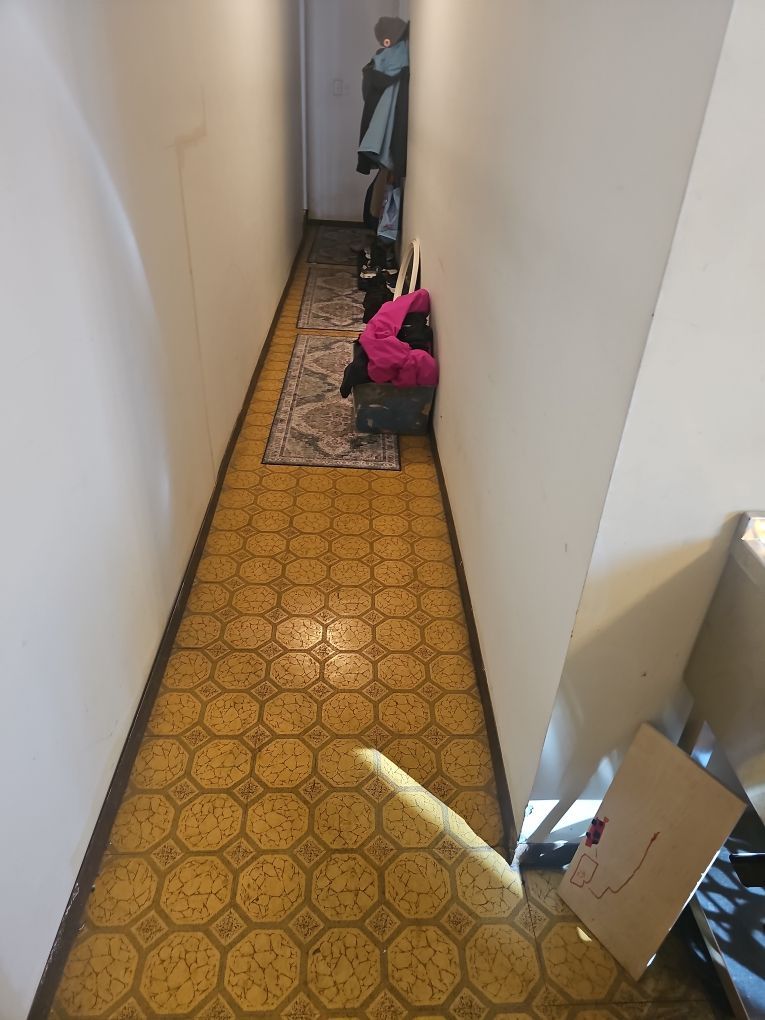
Our team came out to assess the property and confirmed two things pretty quickly: the laundry room contained asbestos-containing material (ACM), and the kitchen had active mold growth. Two separate problems, one home, one team to handle it all.
The photos below show the initial conditions in the laundry room before any work began.
 |
 |
 |
What's the Risk With Asbestos-Containing Material?
ACM on its own isn't always an emergency. If it's intact and undisturbed, it can be left alone. The problem is when it starts to deteriorate or when renovation work is planned. That's when fibers get released into the air, and that's when the real health risk kicks in.
According to the U.S. Environmental Protection Agency, asbestos exposure is a known cause of serious lung disease. Proper containment and removal by licensed professionals isn't just the recommended approach. It's the law in most situations.
This homeowner did exactly the right thing by not touching anything and calling us first.
Setting Up Containment Before Anything Else
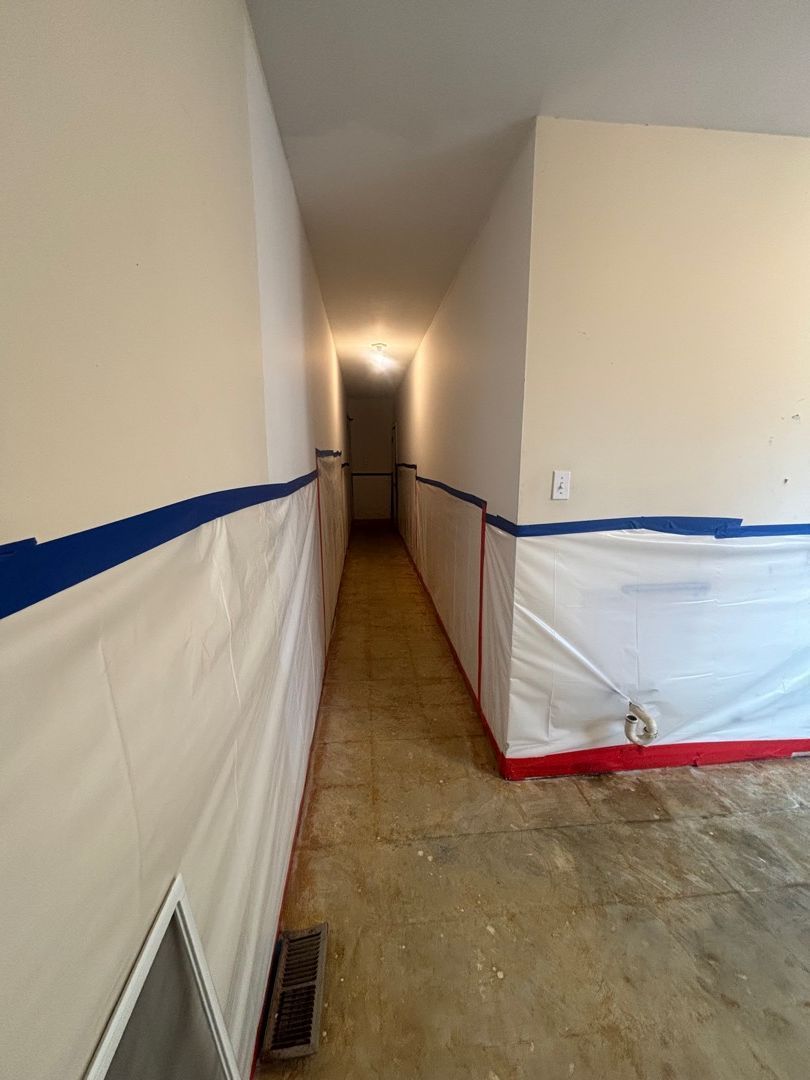
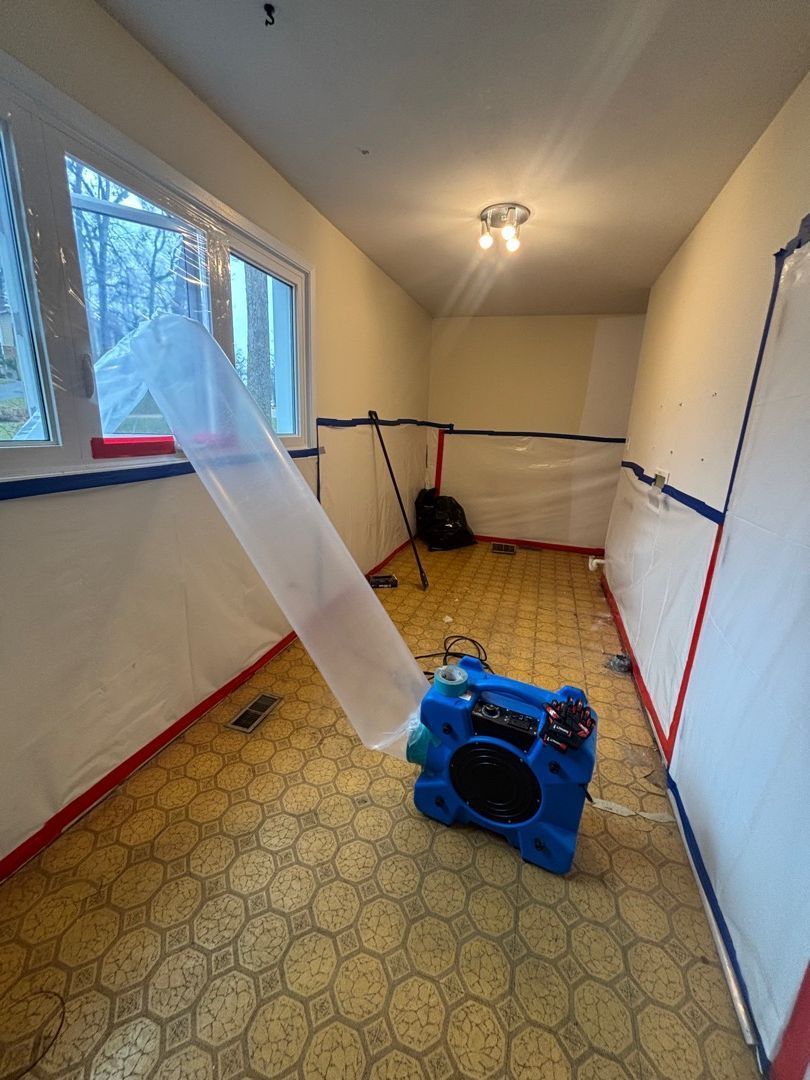
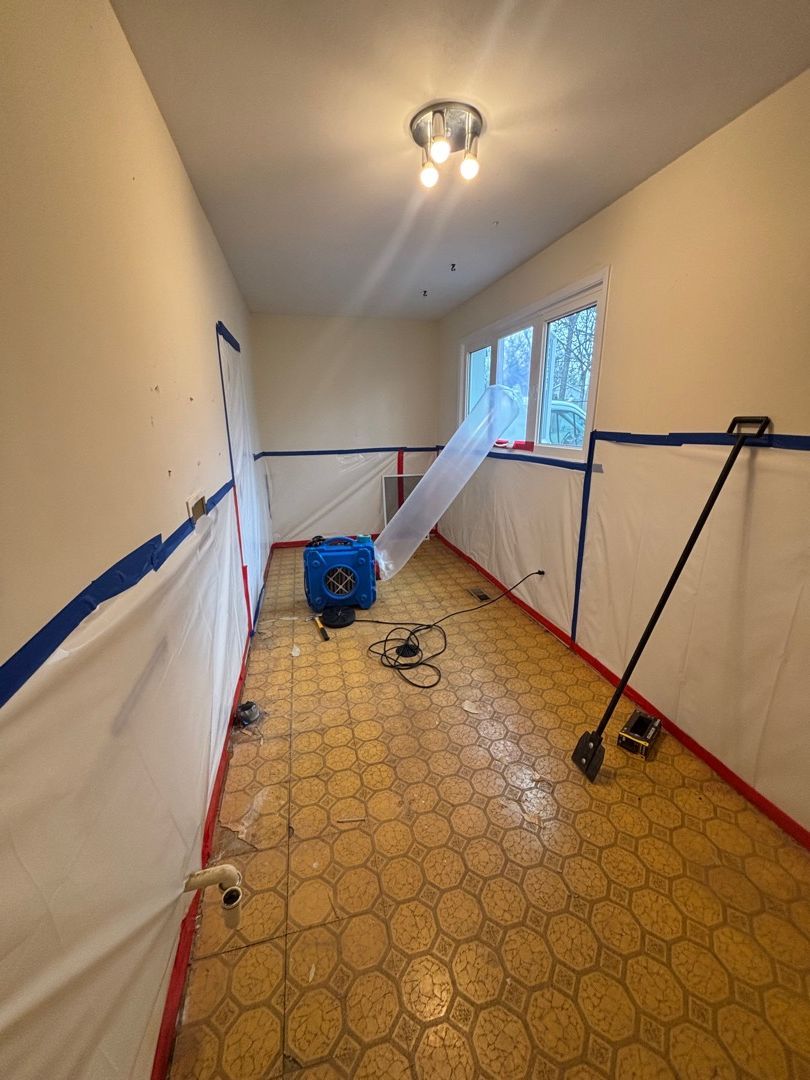
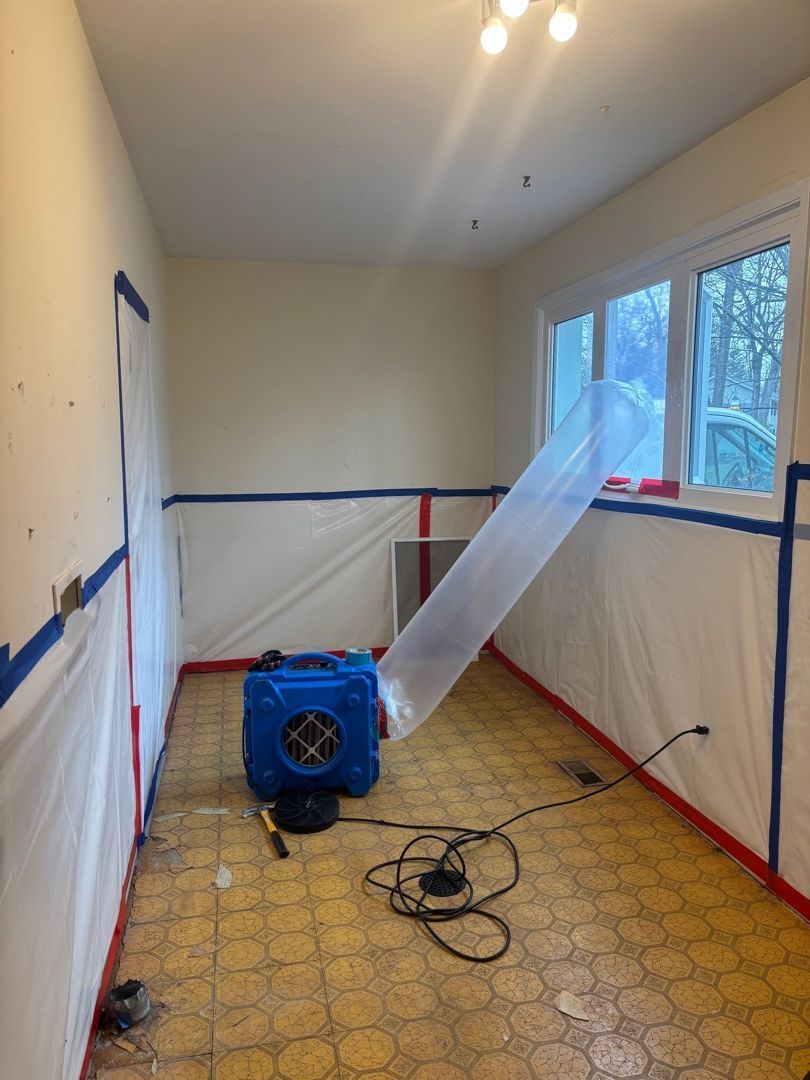
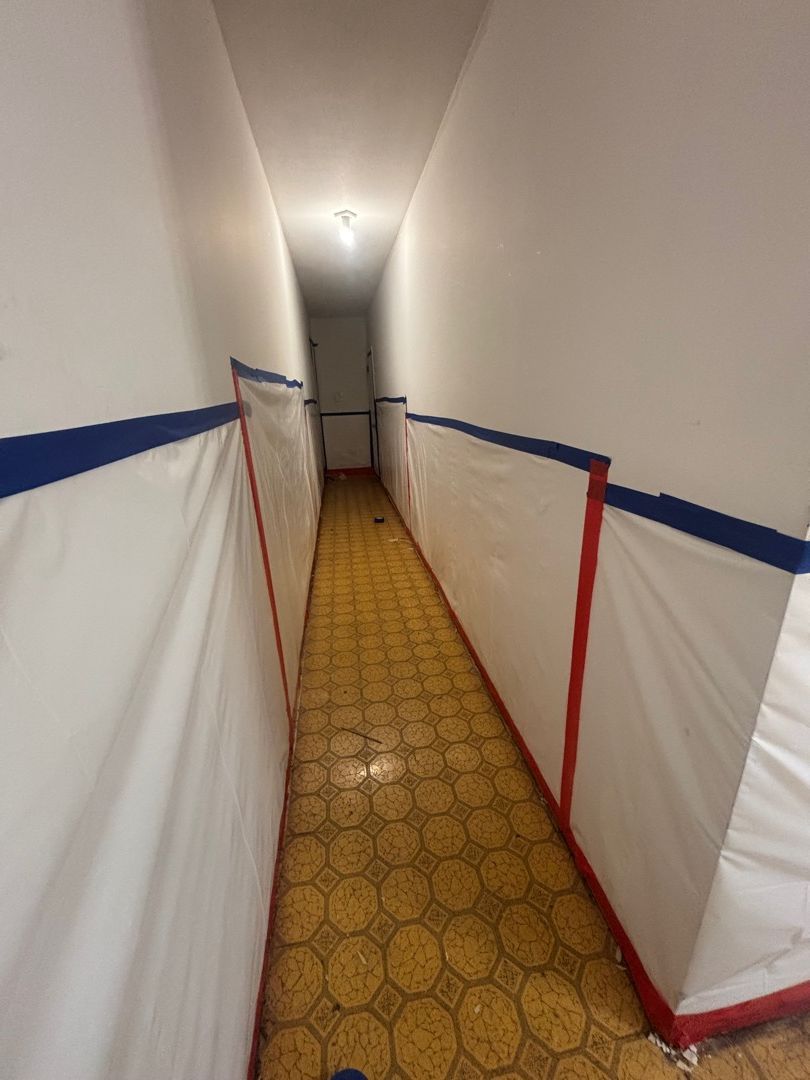
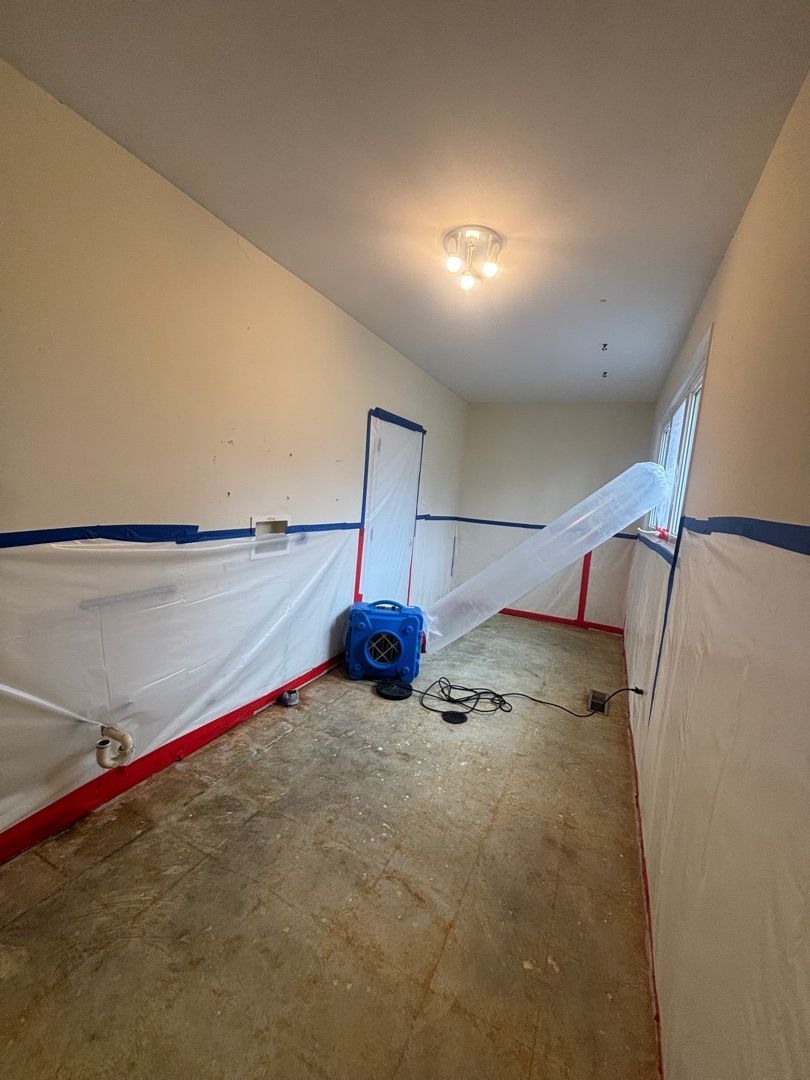
Before a single piece of ACM comes out, we build a containment barrier around the work area. This isn't just plastic sheeting for appearances. It's a fully sealed environment designed to keep asbestos fibers from migrating into the rest of the home.
- Negative air pressure maintained throughout the work zone
- Air scrubbers running continuously to capture airborne particles
- Full personal protective equipment for every technician on site
- Proper waste containment and licensed disposal of all removed material
The photos below show our containment setup and the removal process in progress.
 |
 |
 |
 |
 |
 |
Air Testing: The Step That Proves the Work Was Done Right
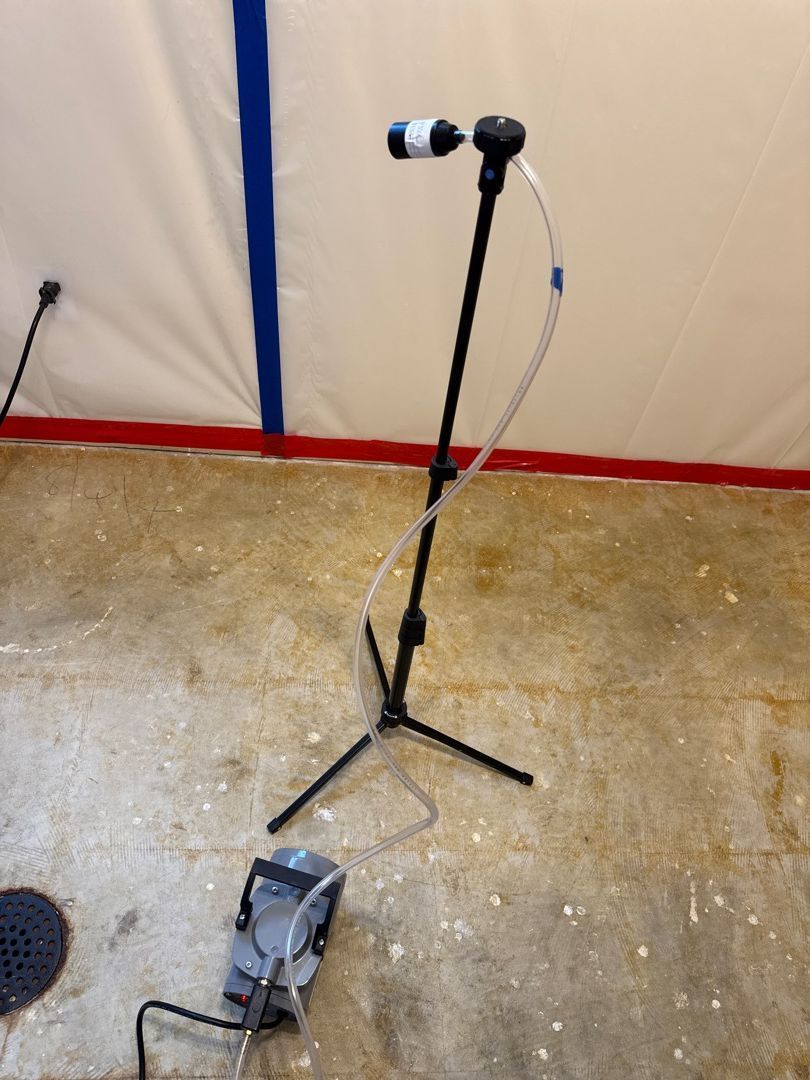
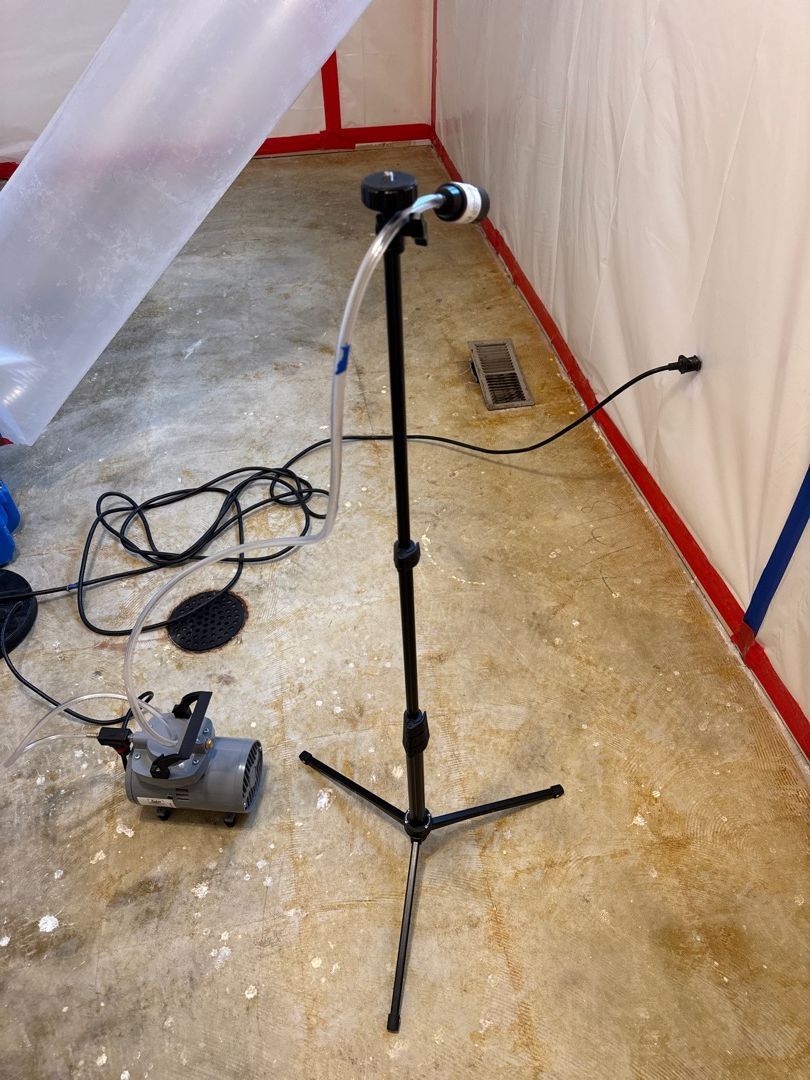
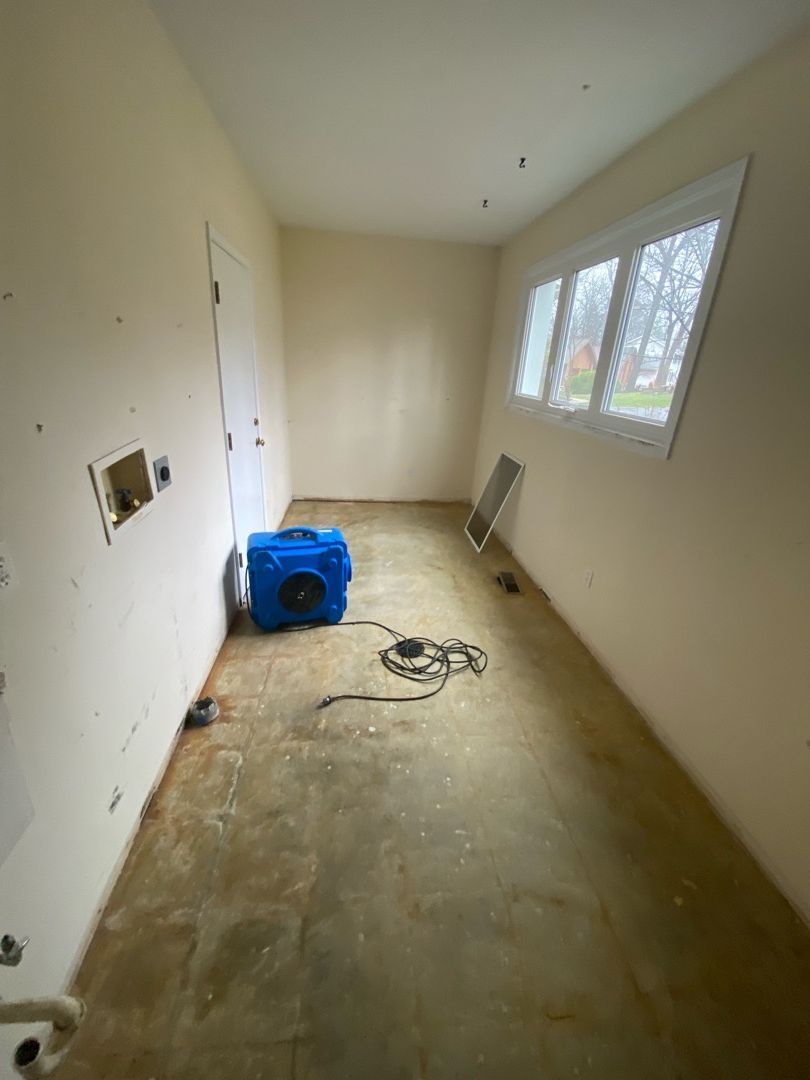
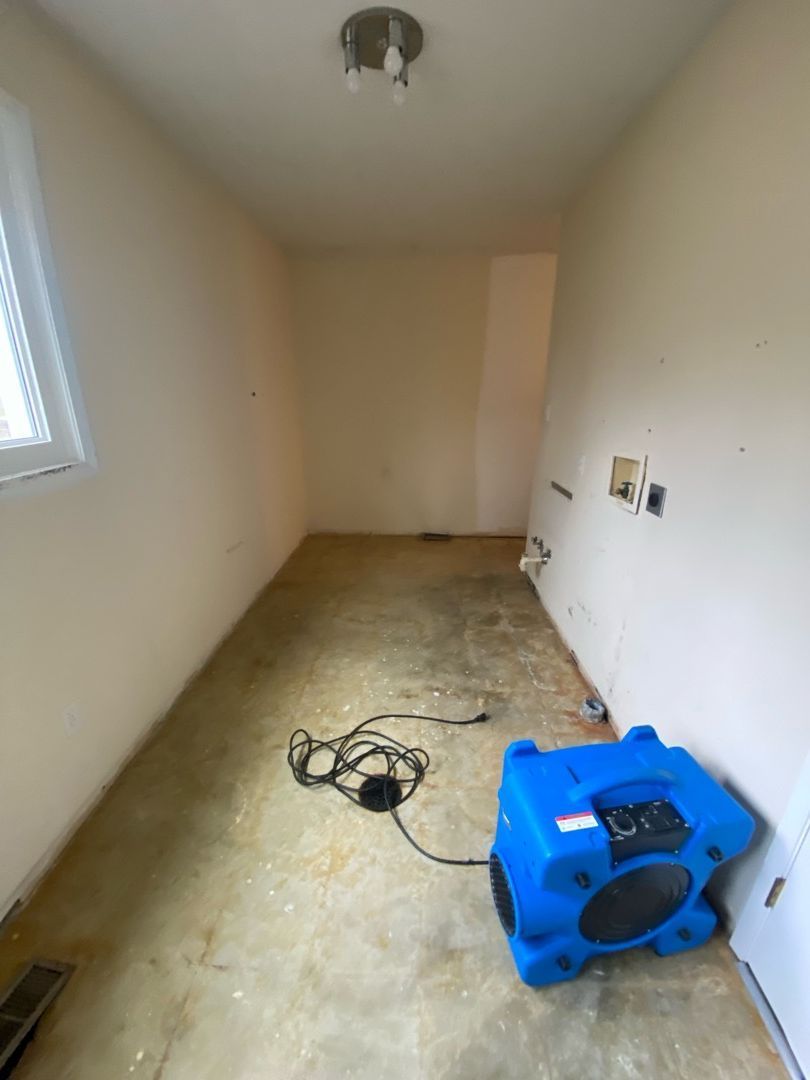
Once the ACM is removed and the area is cleaned, we don't just pull down the plastic and call it a day. Air clearance testing happens before the containment comes down. An independent certified industrial hygienist collects air samples from inside and outside the containment zone. If the particle count doesn't clear, we keep cleaning. Simple as that.
This homeowner passed clearance on the first test. That's a credit to the crew's thoroughness during removal.
Here's what air testing and final breakdown looked like on this project.
 |
 |
 |
 |
The Kitchen Mold: A Separate Problem, Same Solution
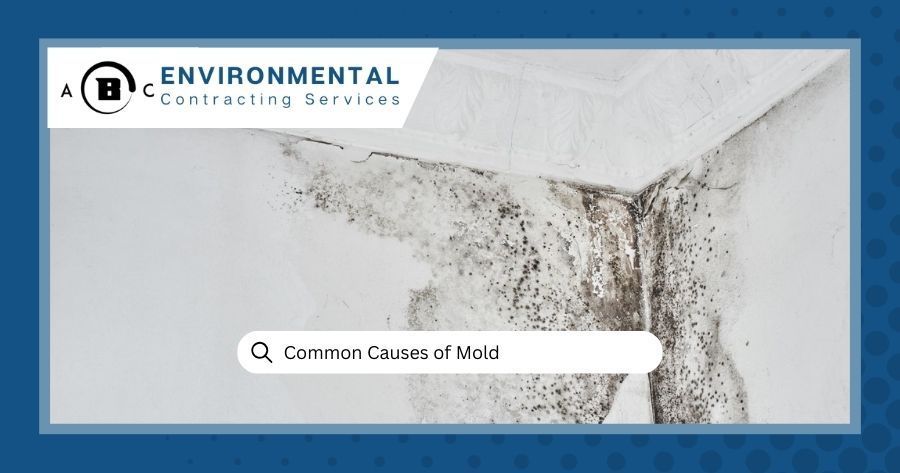
While the asbestos work was being planned, we also addressed the mold growth in the kitchen. Professional mold remediation follows a similar containment-first approach, and we were already on site with the equipment to handle it.
Mold in kitchens often traces back to a slow leak behind a wall, under a sink, or from a dishwasher. Wherever the moisture source was here, the mold had found it and set up shop. We removed affected materials, treated the area, and verified clearance before wrapping up.
If you've dealt with water damage in the past and never had the area properly dried out, mold is often what comes next. Our team has seen it hundreds of times in homes across the St. Louis metro area.
Common Signs You Might Have a Hidden Mold Problem
- A musty smell that doesn't go away no matter how much you clean
- Discoloration on walls, ceilings, or inside cabinets
- Allergy-like symptoms that seem worse at home than elsewhere
- A history of water damage that was handled quickly but not professionally dried
For more on what to look for, check out our St. Louis basement mold remediation case study where we walked through a similar discovery.
Why Finding Both at Once Is Actually a Good Thing
It sounds like a nightmare to hear that your home has both asbestos and mold. And yes, the homeowner's reaction was something like "of course there's two things." But catching both at the same time has a real upside: one mobilization, one project scope, one clearance process. You're not dealing with separate contractors and separate timelines.
We also got to document everything thoroughly for the homeowner's records, which matters if they ever sell the property or file an insurance claim. Proper documentation from a licensed contractor carries weight.
You can also see how a similar situation unfolded in our Florissant asbestos discovery case study.
What to Do If You Suspect ACM or Mold in Your Home
Don't disturb it. Don't try to clean it yourself. Call a licensed professional for an assessment first. The risk of releasing asbestos fibers or spreading mold spores through improper handling is real, and makes the problem significantly worse to fix.
- Get a professional assessment before any renovation work in older homes
- If you see deteriorating insulation, floor tiles, or ceiling material, don't touch it
- Mold covering more than 10 square feet should always be handled professionally, per EPA mold cleanup guidelines
- Request air clearance testing at the end of any abatement job
Concerned About Asbestos or Mold in Your Home?
Our team at ABC Environmental Contracting Services serves Chesterfield and the entire St. Louis metro area. We're licensed for asbestos abatement, mold remediation, and environmental testing, and available 24/7 for emergency situations.
- Free estimates provided
- Licensed and certified technicians
- Air clearance testing included
- Full documentation for insurance and resale
More To Explore